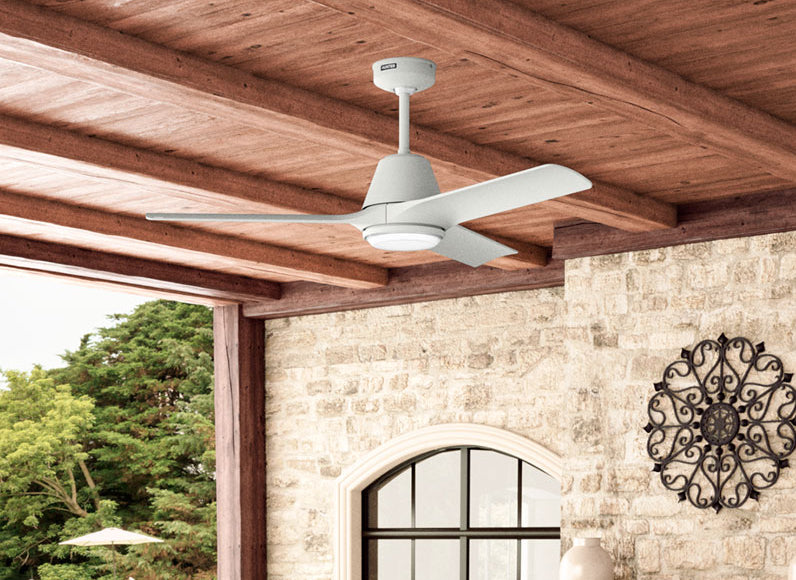
Working in your home workshop or garage can be both relaxing and productive. Incorporating a garage fan can make this experience all the more enjoyable, especially in the hotter months. When incorporating a workshop fan, you will want to select a high-efficiency and high-output fan. At Hunter, we offer garage fans that keep airflow circulating to help prevent a stuffy atmosphere in your home workshop or garage. This can help you stay on your task and have a more enjoyable shop.
This guide breaks down what to look for in high-efficiency fans and the energy savings and comfort benefits they deliver.
What makes a fan high efficiency?
High-efficiency fans are defined by their airflow efficiency - how effectively they move air while using minimal energy. This performance is measured in cubic feet per minute (CFM), and more precisely, CFM per watt. Energy-efficient fans often feature advanced brushless or DC motors, which run cooler, operate more quietly, and consume significantly less energy. In many cases, they can reduce energy use by more than 50% compared to standard fans while delivering equal or improved airflow.
What Features Should You Look for in a High-Efficiency Fan?
There are a few key factors to consider when choosing a high-efficiency fan.
Fan Size & Blade Span
Choosing the right fan size and blade span is one of the most important factors when selecting a workshop fan or garage fan. Larger spaces require larger fans to move air effectively and maintain consistent air circulation. A fan that’s too small for your garage or workshop can struggle to circulate air effectively, running longer and less efficiently. A properly sized high-efficiency fan with a larger blade span can move more air at lower speeds, helping you maintain comfort while minimizing energy use.
A larger blade span doesn’t necessarily mean higher energy usage. In fact, properly sized fans often operate more efficiently because they don’t have to work as hard to cool or ventilate the area.
Recommended Fan Sizes for Workshops & Garages
-
Up to 144 sq. ft. (small garage/work area): 42"–48" blade span
-
144–225 sq. ft. (standard garage): 52"–60" blade span
-
225+ sq. ft. (large workshop or multi-bay garage): 60"+ blade span
For oversized workshops, consider installing multiple fans to ensure balanced airflow.
Airflow Capacity
When choosing a garage fan or workshop fan, airflow capacity is one of the most important performance indicators to consider. As mentioned above, airflow is measured in cubic feet per minute (CFM) - the amount of air a fan moves in one minute. The higher the CFM rating, the more air the fan circulates, making it more effective at cooling and ventilating larger spaces.
Garages and workshops often:
-
Have limited ventilation
-
Contain heat-generating equipment
-
Experience temperature swings
-
Accumulate fumes, dust, or moisture
A higher CFM fan improves air circulation, helping regulate temperature, reduce stagnant air, and create a more comfortable working environment.
Recommended CFM by Garage Size
To ensure adequate airflow, consider these general guidelines:
-
1–2 Car Garage (200–500 sq. ft.) - Look for a fan rated between 3,000–5,500 CFM for effective circulation.
-
3-Car Garage or Large Workshop (500+ sq. ft.) - Choose a fan rated at 10,000 CFM or greater, depending on height and layout.
(Note: Ceiling height and insulation also affect performance. Higher ceilings may require higher CFM ratings.)
Energy Efficiency
Energy-efficient fans may cost more upfront, but will save you money in the long run. Look for fans with energy-saving motors and controls, or even Hunter’s ENERGY STAR® ceiling fans. Look for a fan with three speeds, preferably with variable-speed options. This ensures your workshop fan optimizes airflow and delivers consistent performance year-round.
Blade Shape & Design
Fans with curved, wide-profile blades are engineered to move air more smoothly and efficiently. This design helps:
-
Reduce turbulence and drag
-
Minimize energy loss
-
Deliver quieter operation
-
Improve consistent air circulation
-
Push warm air downward in winter
-
Improve horizontal air movement in summer
-
Eliminate hot and cold spots
In workspaces like garages and workshops, where power tools and equipment are already generating noise, choosing a fan designed for quiet performance can make a noticeable difference.
Blade shape directly impacts how effectively a fan redistributes warm air that rises to the ceiling. In garages and workshops, especially those with higher ceilings, heat naturally collects above the workspace.
Motor Power
When choosing a garage fan or workshop fan, motor size is just as important as blade span and CFM. Larger garages and workspaces require a powerful motor that can consistently move air without overworking. Look for fans with high-torque motors designed to support larger blade spans, as these provide stronger airflow and better long-term durability. For maximum efficiency, consider models with brushless DC motors. They deliver excellent torque while using significantly less energy than traditional AC motors. A properly sized motor ensures smooth operation, quieter performance, and reliable air circulation, even in demanding environments with heat, dust, and extended run times.
Benefits of High-Efficiency Ceiling Fans
There are several benefits of installing a high-efficiency ceiling fan in your home workshop or garage.
-
Lower Energy Bills - Lower energy bills are one of the biggest benefits of installing a high-efficiency fan in your garage or workshop. High-efficiency models are designed to consume significantly less electricity than traditional fans, largely due to advanced motor technology such as brushless DC motors. Because these fans use less power while still delivering strong airflow, they reduce overall energy consumption without sacrificing performance. Over time, this can lead to noticeable savings on your monthly utility bills, especially in garages and workshops where fans may run for extended periods.
-
Year-Round Use - People like high-efficiency fans because they can be used year-round. They are effective in the summer for cooling and during the winter. During winter, fans work by reversing the motor to push warm air down, helping lower heating costs.
-
Improved Working Environment - Installing a fan in your garage or workshop can significantly improve the overall working environment. Proper air circulation helps regulate temperature, reduce stuffiness, and prevent heat from building up near the ceiling. This creates a more comfortable and inviting workspace throughout the year. A well-ventilated garage or workshop can also support better focus and productivity. When airflow is consistent and temperatures are more balanced, it becomes easier to concentrate on detailed tasks and work for longer periods without discomfort.
-
Reduced HVAC Wear - Using a fan can reduce the wear on your HVAC system. This can save money on energy costs and potentially extend the lifespan of your equipment.
FAQ About Energy Efficient Fans
What size fan is best for a garage?
The best fan size for a garage depends on the square footage. For a standard 1- to 2-car garage, a fan with a 52- to 60-inch blade span typically provides adequate airflow. Larger 3-car garages or workshops may require a 60-inch or larger fan, or even multiple fans, to ensure proper air circulation. Choosing the correct size helps maximize airflow efficiency and comfort.
How much more efficient are energy-saving models versus other fans?
ENERGY STAR®certified fans tend to be 20% more efficient than standard models. Those with a fan/light combination can be 60% more efficient.
Can a ceiling fan help cool a garage in the summer?
A ceiling fan does not lower the air temperature, but it improves air circulation and creates a wind-chill effect that makes the space feel cooler. In garages and workshops, proper airflow helps reduce stagnant heat and improves overall comfort, especially when combined with ventilation or insulation.
Do fans help in winter in a workshop or garage?
Yes. Many garage fans have reversible motors. In winter, reversing the blade direction pushes warm air that rises to the ceiling back down into the workspace. This improves heating efficiency and helps maintain a more consistent temperature. Learn more about the direction of your ceiling fan> in winter and summer.
Can you install a ceiling fan in an uninsulated garage?
Yes, you can install a ceiling fan in an uninsulated garage, but performance may vary depending on extreme temperatures. A high-quality garage ceiling fan with a durable motor is recommended for spaces that experience heat buildup. Proper ventilation and insulation will further improve comfort and efficiency.
Do garage ceiling fans need to be rated for damp locations?
If your garage is exposed to humidity, moisture, or temperature fluctuations, choosing a damp-rated fan is a smart option. Damp-rated fans are designed to handle moisture better than standard indoor models, making them more durable in certain garage environments
Is it better to install one large fan or multiple smaller fans in a workshop?
In larger workshops, multiple fans may provide more balanced airflow than a single oversized fan. Distributing airflow evenly helps eliminate hot spots and improves overall ventilation. The best setup depends on the layout, ceiling height, and total square footage of the space.
FAQ About Energy Efficient Ceiling Fans
What size ceiling fan is best for a garage?
The best ceiling fan size for a garage depends on the square footage. For a standard 1- to 2-car garage, a fan with a 52- to 60-inch blade span typically provides adequate airflow. Larger 3-car garages or workshops may require a 60-inch or larger fan, or even multiple fans, to ensure proper air circulation. Choosing the correct size helps maximize airflow efficiency and comfort.
Can a ceiling fan help cool a garage in the summer?
A ceiling fan does not lower the air temperature, but it improves air circulation and creates a wind-chill effect that makes the space feel cooler. In garages and workshops, proper airflow helps reduce stagnant heat and improves overall comfort, especially when combined with ventilation or insulation.
Do ceiling fans help in winter in a workshop or garage?
Yes. Many garage ceiling fans have reversible motors. In winter, reversing the blade direction pushes warm air that rises to the ceiling back down into the workspace. This improves heating efficiency and helps maintain a more consistent temperature. Learn more about the direction of your ceiling fan in winter and summer.
Can you install a ceiling fan in an uninsulated garage?
Yes, you can install a ceiling fan in an uninsulated garage, but performance may vary depending on extreme temperatures. A high-quality garage ceiling fan with a durable motor is recommended for spaces that experience heat buildup. Proper ventilation and insulation will further improve comfort and efficiency.
Do garage ceiling fans need to be rated for damp locations?
If your garage is exposed to humidity, moisture, or temperature fluctuations, choosing a damp-rated ceiling fan is a smart option. Damp-rated ceiling fans are designed to handle moisture better than standard indoor models, making them more durable in certain garage environments.
Is it better to install one large fan or multiple smaller fans in a workshop?
In larger workshops, multiple ceiling fans may provide more balanced airflow than a single oversized fan. Distributing airflow evenly helps eliminate hot spots and improves overall ventilation. The best setup depends on the layout, ceiling height, and total square footage of the space.
What is the best DIY ceiling fan option with no wiring?
If your garage or shop doesn’t have wiring for a ceiling fan, you still have options. Hunter offers universal ceiling fan mounts that let you install a fan and plug it into a standard outlet. This provides overhead airflow in spaces without hardwiring capabilities. If a ceiling fan or mount isn’t the right fit for your space, check out Hunter’s state of the art portable fans. Choose from compact desktop fans to full-size standing fans, combining flexibility with Hunter’s renowned quality to bring refreshing airflow to your space.