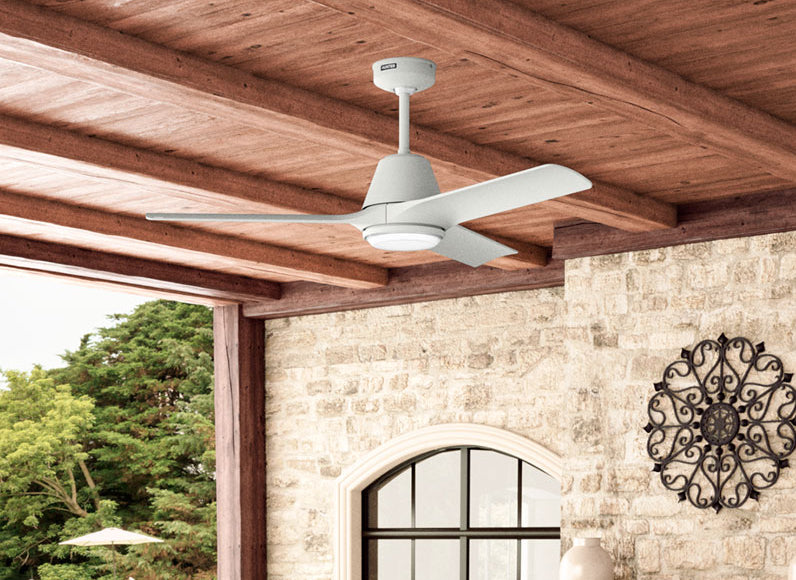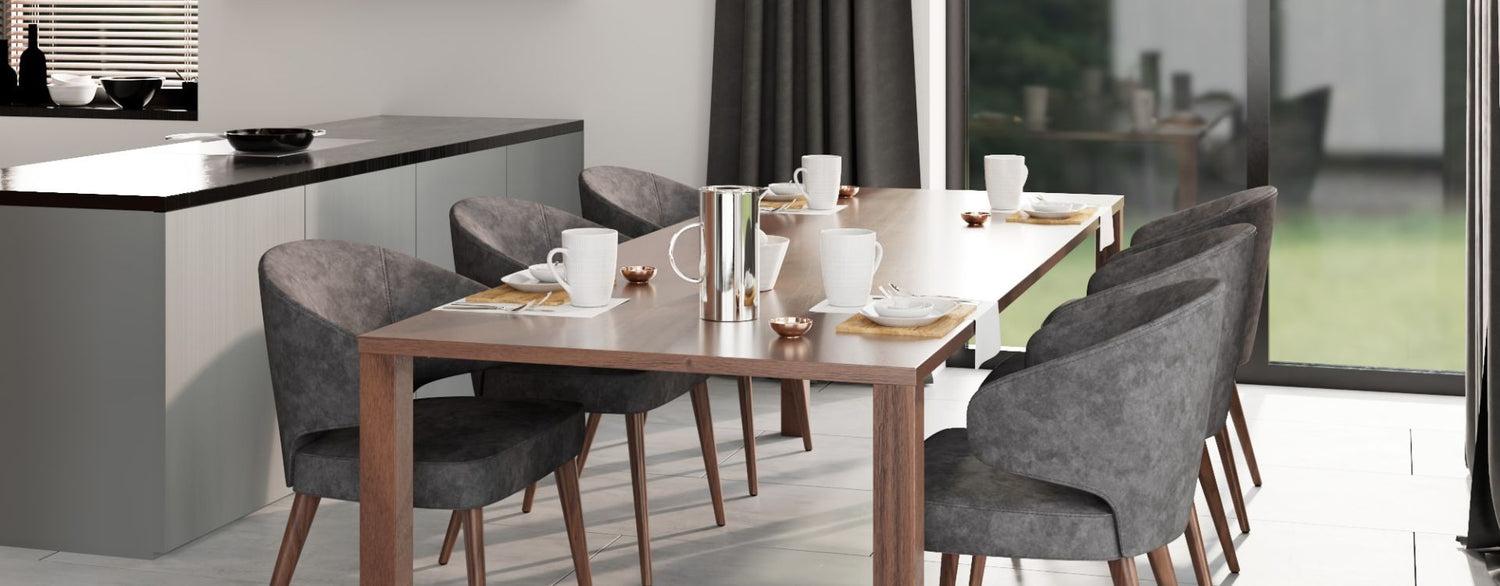
Ceiling fans have evolved beyond simple cooling fixtures. Today’s dining room fandeliers combine decorative chandelier styling with efficient airflow and integrated lighting — making them a practical and stylish centerpiece.
If you’re wondering how to choose the best fandelier for a dining room, it’s important to consider size, ceiling height, airflow performance, and lighting output. This fandelier buying guide for dining rooms walks you through everything you need to know before selecting a chandelier ceiling fan for your dining room.
Is a Fandelier Right for a Dining Room?
Fandeliers are especially well-suited for dining rooms because they provide both illumination and airflow in a single fixture. In rooms with limited space or lower ceiling height, combining a chandelier and ceiling fan eliminates the need for separate fixtures and really can complement your overall room design.
A dining room fandelier works best in enclosed dining spaces where gentle air circulation improves comfort during meals without overpowering the room’s design aesthetic.
Factors to Consider When Choosing a Dining Room Fandelier
When shopping for a dining room fandelier, there are several things to consider. You’ll want to think about the size, style, and lighting options that each fandelier offers.
1. The Right Size Fan
You definitely want to think about the size of the fandelier you are choosing. A fan that is too small will not move enough air. One that is too large can overpower your space.
Proper sizing ensures balanced airflow and proportional design.
To estimate ideal blade span:
-
Rooms up to 100 sq ft → 36–44 inches
-
100–225 sq ft → 44–52 inches
For dining rooms with standard 8-foot ceilings, flush-mount or low-profile fandeliers are recommended. For ceilings 9 feet or higher, a downrod mount improves airflow performance by positioning the fan at the optimal height.
For a more detailed sizing breakdown, explore Hunter’s ceiling fan sizing guide to determine the correct diameter for your space.
2. Style
When you choose a chandelier fan for a dining room, you want to consider the style, and there are many different styles to choose from. There are different locations and light numbers to choose from, as well as different finishes that can make a big difference in the room's design.
You want to look for something that complements the rest of your room.
3. Lighting Considerations
Because a dining room fandelier serves as both a fan and a primary light source, lumen output matters. Most dining rooms require approximately 30–40 lumens per square foot. For a 150 sq ft dining room, this equates to roughly 4,500–6,000 lumens total.
Look for models with integrated LED lighting and dimmable functionality. Dimming allows you to shift from bright task lighting during meals to softer ambient lighting for evening gatherings.
4. Airflow Performance (CFM)
While fandeliers prioritize style, airflow performance remains important. Look for airflow ratings measured in cubic feet per minute (CFM). Higher CFM indicates stronger air movement.
In dining rooms, moderate airflow is typically preferred — enough to circulate air without disrupting table settings or candles.
Hunter offers models engineered to deliver efficient airflow while maintaining a refined chandelier aesthetic.
Benefits of a Compact Ceiling Fan for a Dining Room
Our fandelier dining room buying guide wouldn’t be complete without sharing some of the benefits of installing a fandelier in a dining room.
1. Space-Saving Design
A dining room fandelier is ideal for rooms with limited space. It’s one-stop shopping for cooling and lighting. This eliminates the need for separate fixtures.
2. Aesthetically Pleasing
Fandeliers combine the elegance of a chandelier with the functionality of a fan. They can be a stunning centerpiece in any home.
3. Energy Efficiency
Some fandeliers use energy-efficient motors and LED lighting. This can help to save on your electricity bills. It also provides reversible functions to help with heating in the winter and cooling during the warm summer months.
Many Hunter models are energy efficient, helping reduce electricity usage while maintaining optimal lighting and airflow.
4. Comfortable Air
Fandeliers can reduce the stuffy feeling that can occur in closed dining rooms. With a fandelier, you can better circulate the air.
5. Reduced Dust & Noise
The modern design of these fandeliers offers features such as enclosed or retractable blades. This can reduce noise and minimize dust circulation when compared to a traditional fan.
When you consider these benefits, it’s easy to see why so many people are opting for this lighting and cooling option.
FAQ About Dining Room Fandeliers
What’s the difference between a ceiling fan and a fandelier?
Fandeliers have shorter blades, stronger lighting, and decorative designs. They are ideal for style-forward spaces.
Besides dining rooms, what other rooms are fandeliers good for?
Fandeliers can be good for bedrooms, nurseries, and home offices as well. They are compact in size and have dimmable lighting, making them an optimal choice.
How can I maximize airflow with my fandelier?
Choose the right size and install it in the center of the room for maximum airflow.
Do fandeliers need special wiring?
If you already have a standard ceiling fan or a fan-rated ceiling box, you usually won’t need special wiring. If you hire an electrician to wire your fandelier, they can take a look at your specific situation and determine what is needed.
Is a fandelier louder than a regular fan?
The noise level will depend on the motor quality and installation. A well-made fandelier, properly installed, should be very quiet at low and medium speeds. If you hear rattling or wobbling, there is probably something loose or out of balance.
Are there areas where fandeliers are not optimal?
While fandeliers are great options for many areas of your home, there are some spaces where they are not the optimal choice. These include:
-
Rooms with very low ceilings: In these spaces, it is not safe or comfortable to have a fandelier.
-
Rooms that must stay dark: Home theaters or rooms where it should be dark are not areas where you want to put a fandelier. It can add an unwanted reflection or brightness.
-
Very large great rooms: Placing a single compact fandelier in a very large open great room is not going to provide maximum airflow. Larger open-blade ceiling fans are the better choice.
Whether you’re looking for a modern chandelier ceiling fan, or a compact dining room fandelier, Hunter offers a curated selection designed for style, performance, and energy efficiency. Explore our full collection of fandeliers to find the perfect centerpiece for your dining room.