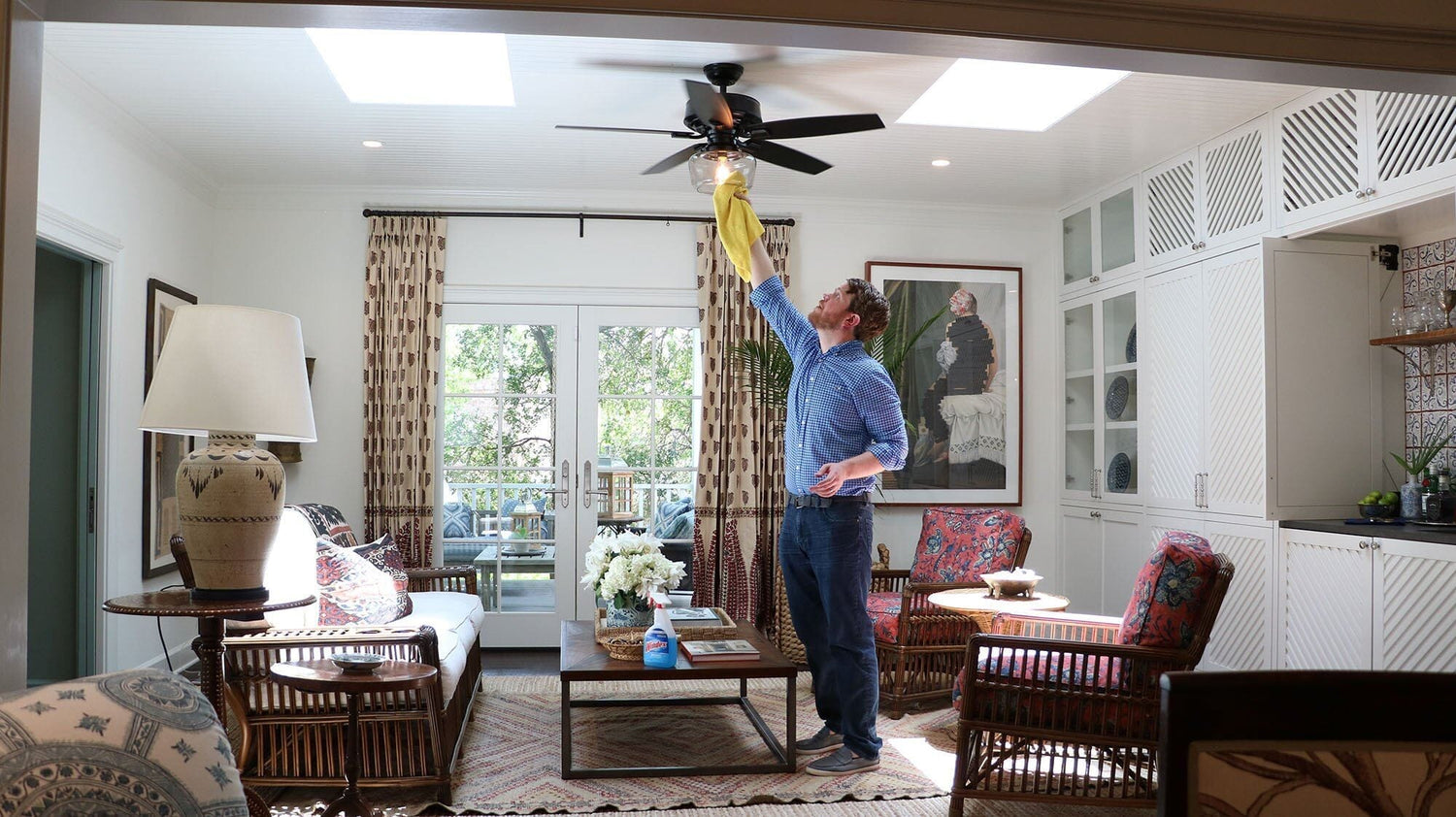
Turn the fan off, dust the blades with a pillowcase or microfiber cloth, wipe away grease or grime with a damp cloth and mild cleaner, clean the motor housing and light fixture, and disinfect the remote. Clean your ceiling fan every 2–3 months to improve airflow and reduce dust.
Materials Needed
- Large pillowcase
- Extendable duster
- Water or gentle cleanser
- Microfiber cloth
- Homemade cleaner (one part vinegar to three parts water)
- Compressed air can
- Cotton cloth
- Rubbing alcohol
- Ladder
- Homemade cleaner (one part vinegar to three parts water)
- Compressed air can
Pro Tip: There may be a bit of dust that drops down, so use an old sheet to cover any exposed furniture underneath the fan as needed.
Steps
Make sure your fan is turned off and the light is not hot tot he touch.
1. Clean Your Fan Blades
How to clean a ceiling fan without a ladder
If you have a flush mount ceiling fan you can clean your ceiling fan without a ladder, just make sure you have an extendable duster with a flexible head. They can extend a few feet high, which makes it easy to clean out-of-reach ceiling fans. Some extendable dusters come with a special attachment that can make dusting both sides of the ceiling fan blade at the same time a breeze. These can cost between $15 and $25.
How to clean a ceiling fan with a pillowcase
Use a large pillowcase, longer than the length of the blade, to capture the collection of dust. For added cleaning power, use a damp pillowcase or lightly spray the inside of the pillowcase with a gentle cleaning solution to remove accumulated grease or a thick layer of dust.
Place the open end of the pillowcase over the blade. Wipe the bottom and top of the blade off by gently sliding the pillowcase toward you. Use light pressure while doing this on the ceiling fan blades: too much pressure could cause the blades to break or go out of balance. Shake off the dust in the pillowcase outside before you wash it.
2. Clean the Fan Body and Light Fixture
While you're cleaning the blades, you might as well clean the ceiling fan’s other nooks and crannies, like the glass shades and motor housing. Use a microfiber cloth or the extendable duster to dust these parts. Or, utilize a can of compressed air to quickly blow off dust.
If you’re just touching up the outside of the fan light glass, use a homemade glass cleaner (one part vinegar to three parts water in a spray bottle) and a microfiber cloth. Spray the cleaner onto the cloth instead of the glass.
If your fan light glass needs a deep clean, remove the glass from the fan and soak it in warm, soapy water. Make sure it’s completely dry before you install the light glass back on the fan.
3. Clean the Fan Accessories
No matter how your control your ceiling fan - pull chain, remote or wall control, it’s important to disinfect your fan remote. Start by removing the batteries from the back of the remote. Dip a cotton cloth into rubbing alcohol (70% isopropyl alcohol) and wipe down the entire surface of the controller. Let the controller dry, then put the batteries back in.
Other Maintenance
Keeping your ceiling fan clean and dust-free is also important for the longevity of your fan and helps keep the air in your room clean. Here are some other things to consider when cleaning your fan.
Use the times when you clean your ceiling fans as an opportunity to change the ceiling fan direction with the changing seasons.
If you have one of our Hunter Original fans, you’ll also need to do some minor ceiling fan maintenance and occasionally give it an oil bath.
Make sure your have your fan registered. Hunter offers a Limited Lifetime Warranty on all fans
Frequently Asked Questions
How often should you clean a ceiling fan?
Most ceiling fans should be dusted every 1-3 months and deep cleaned every 3-6 months. Kitchens, homes with pets, or households with allergy sufferers may need more frequent cleaning because grease, pet hair, and dust build up faster.
Can I spray cleaner directly onto the ceiling fan?
No. Spray onto the microfiber cloth first to prevent moisture from entering the motor housing or light kit.
What is the easiest way to clean a ceiling fan?
The easiest way to clean a ceiling fan is with a microfiber cloth or the pillowcase method, which helps trap dust before it falls onto your furniture or floors. For high or hard-to-reach fans, an extendable duster makes routine cleaning quick and convenient. If the blades have built-up dirt or grease, wipe each blade with a slightly damp microfiber cloth and a mild cleaning solution, then dry them thoroughly.
How to clean really dusty ceiling fan blades?
If your ceiling fan blades have a heavy layer of dust, the pillowcase method is one of the easiest and least messy ways to clean them. Simply slide an old pillowcase over each blade and gently pull it back, trapping those dust bunnies and debris inside the fabric instead of letting it fall onto your furniture or floors. After removing the dust, wipe each blade with a clean, slightly damp microfiber cloth to remove any remaining residue before drying thoroughly.
Should I clean both sides of the fan blades?
Yes. Dust accumulates mostly on top, but both sides should be cleaned to maintain balance and airflow.
Can you clean a ceiling fan without taking it apart?
Yes. Most routine cleaning can be completed without removing the blades or disassembling the fan.
What can I use to clean sticky ceiling fan blades?
Sticky ceiling fan blades can usually be cleaned with a soft microfiber cloth dampened with warm water and a few drops of mild dish soap. For stubborn grease or residue, you can also use a diluted solution of equal parts white vinegar and water. Always apply the cleaning solution to the cloth rather than spraying it directly onto the fan, and avoid abrasive cleaners, bleach, or harsh chemicals that could damage the blade finish. After cleaning, wipe the blades with a dry microfiber cloth to remove any remaining moisture and help prevent streaks or dust buildup.
Why does my ceiling fan get dusty so quickly?
Ceiling fans naturally collect dust because their moving blades create airflow that pulls airborne particles toward the fan. Static electricity can also cause dust to cling to the blade surfaces. Factors like your home's HVAC system, open windows, pets, and kitchen grease can all increase dust buildup. In kitchens, grease particles can make dust stick more easily, while pet hair and dander add to the accumulation.
How do you clean the glass light covers on a ceiling fan?
Before cleaning, turn the ceiling fan off and allow the light bulbs and glass shades to cool completely. Carefully remove the glass light cover according to your fan's instructions, then wash it with warm water and a small amount of mild dish soap. Rinse thoroughly and dry it with a soft, lint-free cloth before reinstalling it. Avoid using abrasive cleaners or scrubbing pads, as they can scratch or damage the glass finish.