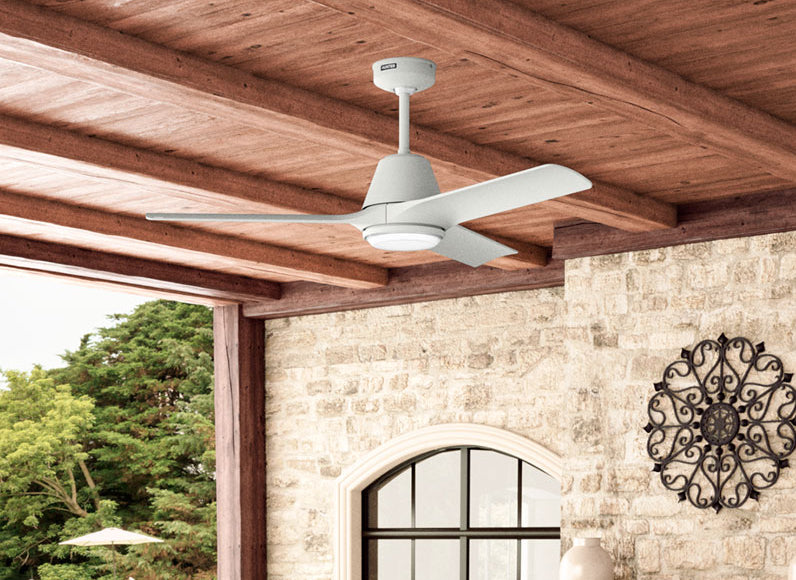
When you’re shopping for a new ceiling fan, there are so many available options that it can become overwhelming quickly, especially if you’re a first-time buyer. One of the many choices shoppers face is deciding between a caged fan and a fandelier. Both of these have unique characteristics that consumers can benefit from depending on what they’re looking for.
What is a Caged Ceiling Fan?
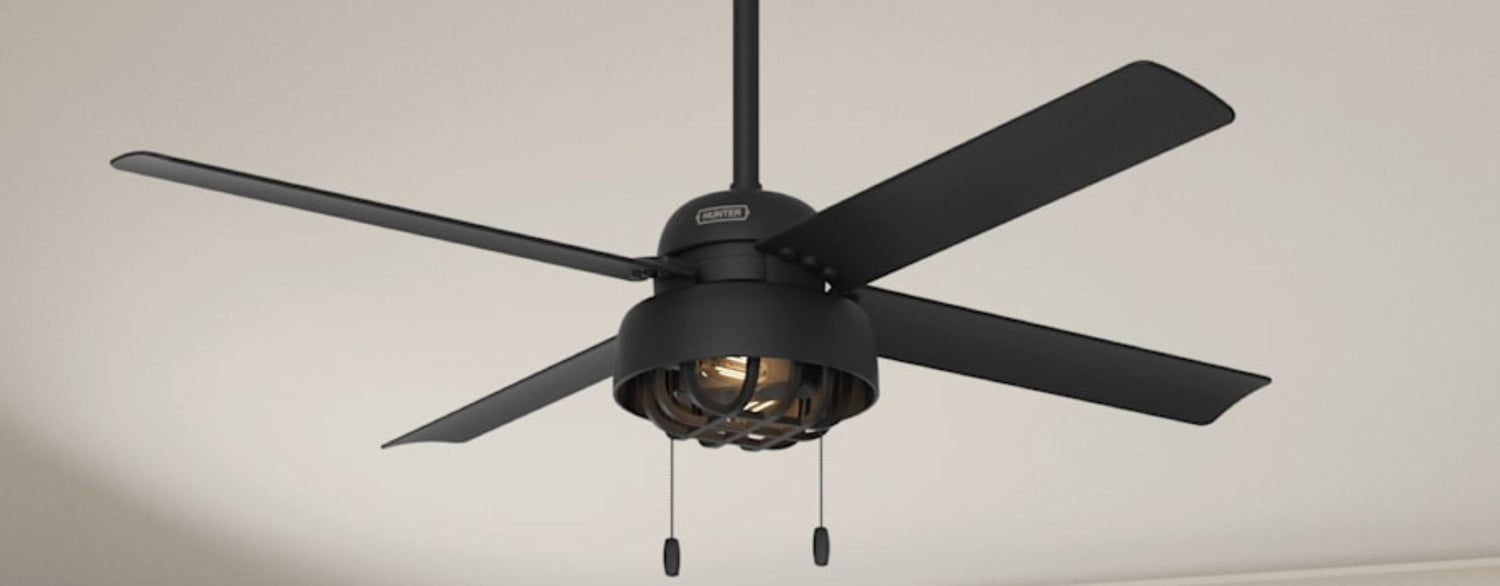
A caged ceiling fan keeps the spinning blades inside a cage or drum. It can also include a lighting fixture. Many models are flush-mounted. People often gravitate towards these if they have tighter rooms or 8-foot ceilings. Hunter provides low-profile ceiling fans for people with these particular situations. These fans deliver reliable airflow and quiet performance, which is always optimal.
If you’re shopping for a caged ceiling fan, you’ll notice a smaller size than with open-blade fans. The built-in light in some models is often used as the main ceiling light in a room.
Benefits of a Caged Ceiling Fan
There are several benefits to choosing a caged ceiling fan. These include:
● Having an enclosed look that is also safe: With a Hunter caged fan, the rigid cage acts as a protective barrier. This keeps blades completely out of reach from tall guests or in rooms where there are high bunk beds.
● A compact fan for an 8-foot ceiling: These fans focus airflow directly downward. The smaller blade span focuses the airflow directly downward, delivering a concentrated, cooling breeze right where you need it without overwhelming the room’s proportions.
● Having one fixture for lighting and air circulation: Hunter fans combine high-efficiency air circulation with multi-bulb lighting kits. Look for Hunter models featuring reversible WhisperWind® motors. They give you all the concentrated cooling power and bright illumination of a multi-fixture setup, but are virtually silent when operating. These are ideal for compact bedrooms or home offices.
What is a Fandelier?
A fandelier is a fan and a chandelier combined. It has the characteristics of a chandelier for lighting and a ceiling fan for air circulation. Fandeliers have become increasingly popular in modern homes thanks to their ability to combine decorative lighting with functional airflow in one fixture. If you want to learn more about why homeowners are embracing this style, check out our guide on why fandeliers are trending. Many designs hide the blades inside the light frame. In other cases, the blades are short, so the focus looks more like a decorative ceiling light than a traditional fan
Benefits of a Fandelier
● Airflow is beneficial to make small to medium rooms more comfortable
● Can be used as the room’s focal point
● Compact blades are less noticeable
Caged Ceiling Fan vs. Fandelier: Key Differences
Now that we know the characteristics of caged ceiling fans and fandeliers, it’s time to look at the main differences between the two.
Lighting & Style
A caged ceiling fan may not be as aesthetically pleasing as a fandelier. A caged ceiling fan can give off a more industrial look or a farmhouse feel. The fandelier is designed to look like a chandelier. It serves as a centerpiece while providing decorative lighting. If you are looking for a more centerpiece design, the fandelier is your better option.
Airflow
If you’re shopping for a fan, you are obviously concerned about airflow. With a caged ceiling fan, it can get tricky. The enclosure feature can influence the airflow. Check the airflow specs for these products, as some enclosed designs can feel softer than open-blade designs. When you purchase a Hunter Fan, it is built with an optimized motor and precision blades. SureSpeed ceiling fans produce more than 33% more air velocity compared to competitors while still providing Hunter’s whisper-quiet performance.
On the other hand, the fandelier is typically built around the lighting. The blades are smaller, so they deliver less airflow than large-blade ceiling fans. If you are looking for a strong breeze over a large space, a fandelier may not be the best choice. This is also one of the major differences between a bladeless fan and a fandelier. A bladeless ceiling fan conceals the blades inside a protective housing rather than having them exposed. A bladeless ceiling fan provides consistent airflow, which can help to make a room more comfortable.
Fit & Size
When comparing a caged ceiling fan vs. fandelier, one thing they have in common is that they are both used in smaller rooms that have lower ceilings. Either fan should be installed in the middle of the room and at least 7 feet above the floor. You also want to be sure it is at least 18 inches from the walls.
If you have a larger room, Hunter offers large ceiling fans designed for maximum airflow and performance. They are ideal for living rooms and master bedrooms. And, small ceiling fans help bring dependable airflow to smaller rooms as well.
If you’re unsure what size ceiling fan is right for your room, check out our Hunter ceiling fan size guide for step-by-step help choosing the perfect fit.
Blade Visibility
One of the biggest differences between a caged fan and a fandelier is the visibility of the blades. Hunter's caged models use shorter, balanced blades that remain visible inside the cage. This makes them an exceptional choice for people looking for a minimalist, modern look.
In a fandelier, fan blade designs are often hidden or retractable when not in use. When looking at an enclosed ceiling fan vs. a chandelier fan, the chandelier fan has a cleaner visual look when it’s not in use. It’s also designed to look more like a chandelier than a fan.
Hunter fandeliers feature miniature, deeply recessed blades hidden within a compact housing. A good example of this is found in our Brookside and Avel Collections. These blades often measure just 20 to 30 inches wide.
FAQ about Caged Ceiling Fan vs. Fandeliers
Which is Better: Caged Fan or Fandelier?
It’s not a case of what is better, it’s more of what you are looking for. Generally, you should choose a caged ceiling fan if you are looking for a more industrial feel. A caged fan is also a good idea if you are worried about safety in a small space or a room with low clearance. Caged fans are also practical for low-maintenance fixtures.
A fandelier is a better choice if you’re looking to decorate a formal space such as a dining room. It is also a good choice if you want fan blades that will not be seen. People often choose a fandelier for aesthetic reasons over a caged ceiling fan.
What type of room is a caged ceiling fan best for?
A caged ceiling fan is best for small bedrooms, kitchens, entryways, and low ceilings.
What type of room is a fandelier best for?
Choose a fandelier for dining rooms, master bedrooms, and any living spaces where you need a focal light.
Does a fandelier work as well as a ceiling fan?
Fandeliers are best for ambient cooling in small to medium rooms. They generally do not move as much air as a traditional ceiling fan.
Are caged ceiling fans loud?
Caged ceiling fans are often quiet when operated at low speeds. The enclosure can create more noise when you turn up the fan to a high speed.
The Bottom Line
Both caged ceiling fans and fandeliers offer a stylish alternative to traditional ceiling fans. A caged ceiling fan offers a modern industrial look with compact functionality. A fandelier provides a more upscale look, blending elegant lighting with softer airflow. Choosing one over the other ultimately comes down to your preferences, room size, and ceiling height.
Whether you’re looking for either style, Hunter Fans has it all. With a large variety to choose from, there is something for everyone. When you shop Hunter fans, you can count on style, functionality, and affordability, all rolled into one.