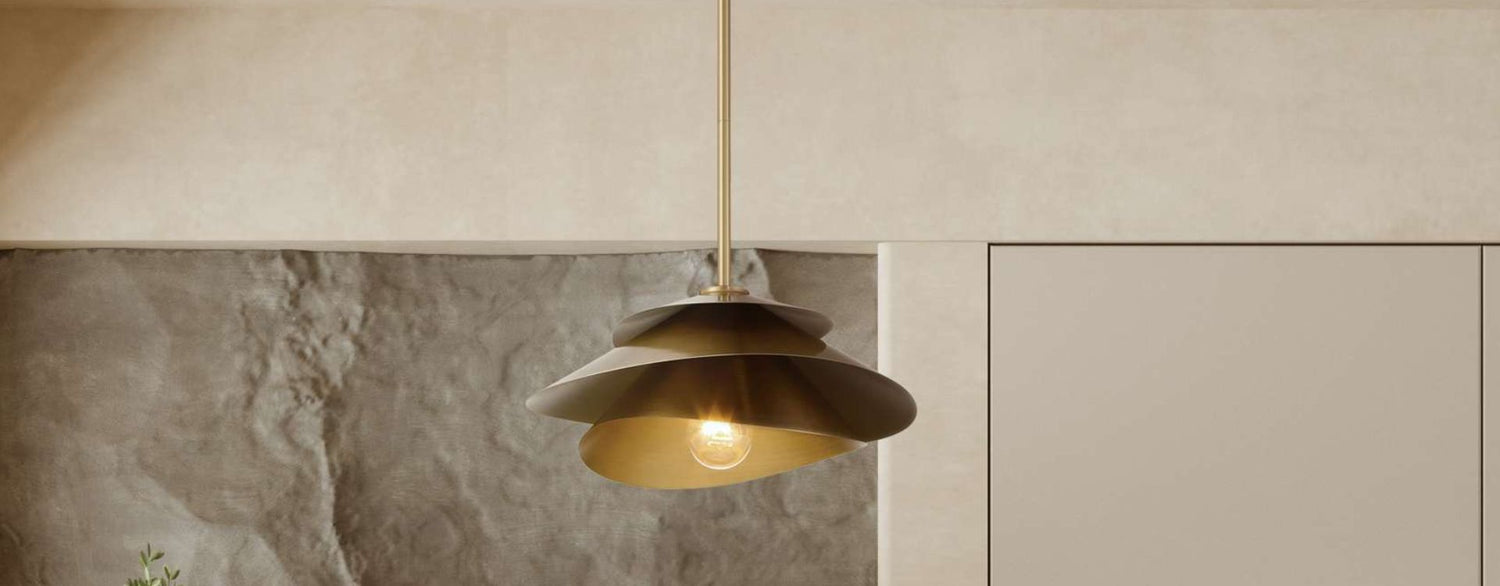
In 2026, pendant lighting is showing up in homes across America with a more intentional approach to shape and structure. Designers are using forms such as elongated cones, rounded globes, and ribbed glass cylinders, since each one directs light differently and helps people understand how a kitchen island or dining table is meant to function within the room.

How Pendant Lighting Arrived at Its 2026 Moment
The story of pendant lighting goes back to how people used to light their homes for centuries. Long before electricity, families hung oil lamps and metal lanterns to keep open flames away from work surfaces and to spread light more effectively through a dark room. Once electrical wiring became common, those old-school hanging lamps shifted from just functional candles to more of a design option that could be shaped by the needs of the home. People started selecting lighting fixtures based on how they cooked, where they spent most of their time, and the rooms they used most in the home. By the 1950s, mid-century modern pendant light design introduced basic shapes like globes and cones that helped define seating areas and work surfaces in the home. That simple approach still drives how homeowners choose lighting in 2026.
Poul Henningsen once said,
“To create a lamp is to create a little piece of architecture.”
His point still applies in 2026, as pendants help identify practical areas in a room, such as where people cook, sit, or gather, while still supplying the light those tasks require.
Style 1: Sculptural Shapes Take the Lead
Sculptural shapes are one of the most noticeable shifts in modern pendant lighting for 2026. Many fixtures that once relied on simple domes or drum shades now use forms that influence how the room is used. These shapes help mark important spots in a kitchen or dining area, draw attention to a work surface, or clarify where seating naturally belongs.
Common shapes appearing this year include:
-
Rounded domes that spread light across broad surfaces
-
Elongated cones that focus the light on a specific surface, such as a prep area or island workspace
-
Layered discs that reduce direct glare and help shape a softer, more controlled spread of light
-
Ribbed glass cylinders that break up harsh brightness and make the light easier on the eyes
-
Geometric, multi-part pendants that mark the center of a table or island and give the room a clear focal point

These shapes work great in both dining rooms and kitchens because they help define where your home’s main activity takes place, whether it’s a seating area or a prep surface. They give enough structure to the space without relying on oversized details or heavy decoration. Finishes like our Matte Black or Brushed Nickel fit easily into most home palettes, and many homeowners look to Hunter’s options in the dining room lights category when they want pendants that coordinate with nearby fixtures.
Style 2: A Refined Material Palette
Three material directions stand out this year, supported by what designers specify most often and what homeowners say they rely on for daily use. Each one reflects a clear shift in how people want their lighting to perform and how it should look in the home:
Natural Materials
Woven fibers, unfinished woods, and fabric-wrapped shades help soften strong lines in the room and reduce glare from higher-output bulbs.
Mixed Metals
Combinations of Matte Black with Brass or Brushed Nickel with Bronze support the demand for fixtures that coordinate with faucets, hardware, and appliances.
Glass With Character
Seeded, ribbed, and opal glass continue to gain traction because they help distribute light evenly across surfaces and keep shadow lines subtle.
Homeowners looking to coordinate ceiling lights with pendants often refer to complementary fixtures in the flush mount lighting category to keep the overall palette consistent.
Style 3: Pendant Lighting as a Practical Asset in the Kitchen
Kitchen pendant lighting remains one of the most important design decisions in modern homes. Kitchens function as multitasking environments, and pendants clarify how different zones are used.
Interior Designers suggest a few ways pendants can make your daily kitchen tasks easier:
-
Set them up to supply steady light over your prep areas so chopping and cooking are easier to see.
-
Use them to mark where seating belongs along the island, which helps organize the space.
-
Have them minimize the shadows that can fall across cutting boards or counters.
-
Target them in such a way that they give your family a reliable light source for homework or small projects on the island.

The best modern kitchen pendant lights this year feature clear glass or matte shades paired with hardware finishes that repeat elsewhere in the kitchen. They are scaled to match island length and hung to maintain clear sightlines between people.
Style 4: Mid-Century Influence Continues
We believe that mid-century modern pendant light designs will continue to be popular in 2026 because the silhouettes deliver a functional lighting source throughout the home while still providing a sense of nostalgia that reminds customers of the home they grew up in. Hunter designers appreciate these shapes for the way they fit into open layouts, brighten shared spaces evenly, and tie in easily with the finishes already used throughout the home. Modern metals and new glass treatments give these familiar forms another layer of usefulness, making them simple to incorporate into updated interiors.
George Nelson summarized this era’s lasting impact:
“The purpose of design is to make the ordinary extraordinary.”
Hunter’s pendant collections reflect this approach by using proportions inspired by mid-century design while updating the fixtures with current materials, improved wiring, and installation features that meet today’s standards.
Style 5: A Clearer Approach to Dining Room Lighting
Dining areas depend on lighting that makes it easy for people to see one another and the food in front of them. Next year, you’ll see that designers are choosing pendants that provide even illumination across the table and cut down on the strong shadow lines that can appear with older or poorly placed fixtures. These updates help mealtime conversations and other activities at the table feel more natural and visually comfortable.
Common choices include:
-
Ribbed glass forms that soften the light
-
Mixed-metal fixtures sized to match the length of the table
 Many homeowners also browse through our dining room lights collection when they want pendants that coordinate with nearby sconces or flush mounts.
Style 6: Adjustable Lighting for Homes Like Yours
Another style you’ll see growing in this next year is that Hunter pendants are built with adjustable lighting features so homeowners can set the brightness and color output to match cooking, seating, or evening use.
Key updates include:
-
Adjustable drop lengths
-
Dimmable LED modules
-
Improved glare control through better glass diffusion
-
Bulbs with tunable color output
These improvements allow modern pendant light designs to work comfortably for cooking, reading, or spending time with family at the end of the day. Hunter draws on years of engineering experience to build fixtures that offer stable light and dependable performance.
Style 7: Why Hunter Pendant Lights Stand Out
Many customers who look at Hunter pendant lights already have one of our ceiling fans, and they often tell us they return to Hunter because the products they bought years ago are still working well. Hearing that means a lot to us. It reminds us that every finish, every piece of hardware, and every design choice has to earn that trust again.
Hunter has been building dependable products since 1886, and many families share memories of growing up with one of our fans. Those stories stay with us, and they guide the care we put into each new lighting design. When customers return to browse our pendant lighting options, we take it as a genuine compliment and a responsibility we do not take lightly.
Understanding the Impact of 2026’s Modern Pendant Lighting Styles
Modern pendant lighting in 2026 continues to shape the way people use their homes. A single pendant over the island can light a busy morning, and another above the dining table can anchor the room during an evening meal.
As we look at the modern pendant lighting styles shaping 2026, one idea keeps coming up in conversations with homeowners. People want lighting that actually works for their day-to-day routines and holds up as the years pass. That is the mindset we bring to every Hunter design. We appreciate the fact that families trust us with these decisions, and that trust helps drive us towards crafting high-quality light fixtures that stay dependable long after they’re installed.