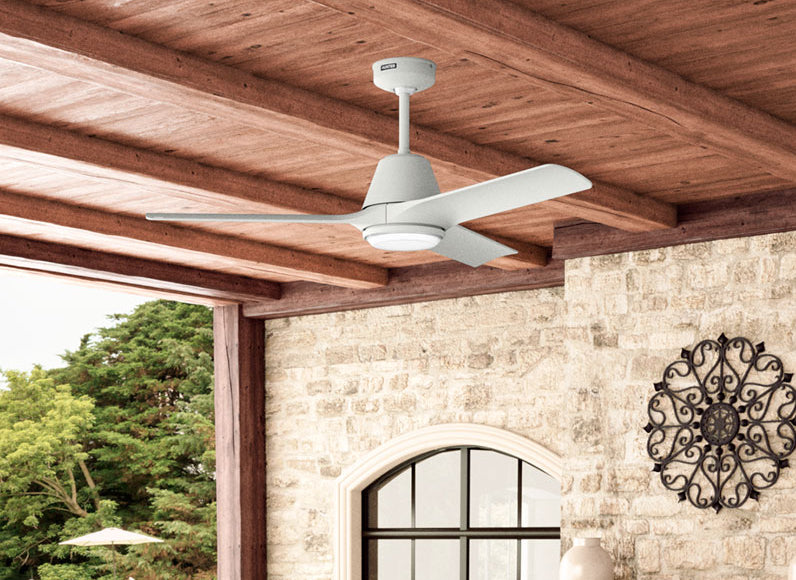
Will a Ceiling Fan Cool a Garage? What It Can and Can’t Do
Open the door to your garage on a hot summer afternoon, and you may feel the heat before you even step inside. Maybe you only came out to grab something from the freezer. A few minutes later, your shirt is sticking to your back, and you are wondering how one room can possibly feel so much hotter than the rest of the house.
Then you look up at the ceiling and wonder if a fan would make a difference.
Will a ceiling fan cool a garage?
A ceiling fan can make a hot garage feel more comfortable by creating a breeze you can feel. Understanding how that happens requires a little science, but the explanation is pretty simple.
Can a Ceiling Fan Actually Lower the Temperature in a Garage?
Imagine your garage is 95°F when you turn on the ceiling fan. After the blades have been spinning for several minutes, the thermometer will probably still read 95°F.
Yet standing underneath the fan can feel much better.
Moving air passes across your skin and helps sweat evaporate. As evaporation occurs, heat energy leaves with the moisture, helping your body cool itself.
Bill Nye the Science Guy, once demonstrated this principle with a wet sock and a fan. He put a wet sock on his foot and pointed a fan toward it. As the water evaporated into the air, it carried heat energy with it. His wet foot felt cooler.
Your body uses the same basic principle when sweat evaporates from your skin.
That’s just science.
A ceiling fan creates the airflow that supports this process. The amount of relief you feel can change based on conditions inside the garage.
Why Does a Garage Get So Much Hotter Than the Rest of the House?
Your garage may share a wall with your home, yet the two spaces can feel completely different on a hot summer afternoon.
Direct sunlight is often part of the reason. A garage door can absorb heat for hours, especially when it faces the afternoon sun. That heat gradually enters the garage, raising the temperature inside.
The roof can have a similar effect. Garages often have less insulation than conditioned living areas, giving outdoor heat an easier path into the room.
A vehicle can add more heat after you arrive home. The engine continues releasing heat after you park, and closing the garage door keeps that heat within an already hot environment.
The garage may remain uncomfortable long after sunset. Concrete can absorb heat during the day before slowly releasing it later. By the time you walk into the garage that evening, you may be feeling the effects of heat that has been building for hours.
Why Does a Ceiling Fan Feel Better at 85 Degrees Than at 110 Degrees?
There is a significant difference between a warm garage and one that has reached dangerously high temperatures.
At 85°F, a steady breeze may make working at your bench considerably more comfortable. As temperatures climb toward extreme levels, your body has to work harder to manage the heat.
Heavy protective clothing may also limit how much moving air reaches your skin. The experience can feel very different for someone wearing work gear than for someone dressed for a casual afternoon in the garage.
When temperatures get dangerously high, a fan may only go so far in helping you feel comfortable. Heat illness can still be a serious risk, so pay attention to how you feel and take steps to cool down when needed.
A ceiling fan can make many warm garages more comfortable. Extreme heat requires greater precautions.
Can Opening the Garage Door Help a Ceiling Fan Work Better?
It depends on the outdoor conditions.
Imagine your garage has trapped heat throughout the afternoon. Later that evening, the outdoor temperature begins to fall. Opening the garage door lets cooler outside air enter the space, and the ceiling fan can help circulate it throughout the garage.
The experience can be very different at three o’clock in the afternoon when the driveway is baking in direct sunlight. During extreme outdoor heat, the incoming air may provide little temperature relief.
Timing can make a noticeable difference. Cooler morning or evening air may create better conditions for releasing heat that has accumulated inside the garage.
A ceiling fan circulates air within the space. An open garage door can create an opportunity for air exchange when outdoor conditions are favorable.
Does a Ceiling Fan Help in a Garage With High Ceilings?
Walk up a ladder in a heated garage during winter, and you may notice that the air near the ceiling feels much warmer than the air below.
Warm air naturally rises, creating temperature layers within a tall space. This is known as heat stratification.
A ceiling fan can help mix the air so warmth spreads more evenly through the garage. During colder months, this can make a heated workspace feel more consistent.
Mounting height also affects how airflow reaches the occupied area. Garages with higher ceilings may benefit from downrod ceiling fans, which bring the fan closer to the people below.
Will You Feel the Breeze Everywhere in the Garage?
The answer depends heavily on the size and shape of the room.
Imagine spending Saturday afternoon restoring an old truck. You might spend an hour leaning over the engine before moving to a workbench along the opposite wall. The breeze may feel strong in one area and much weaker in another.
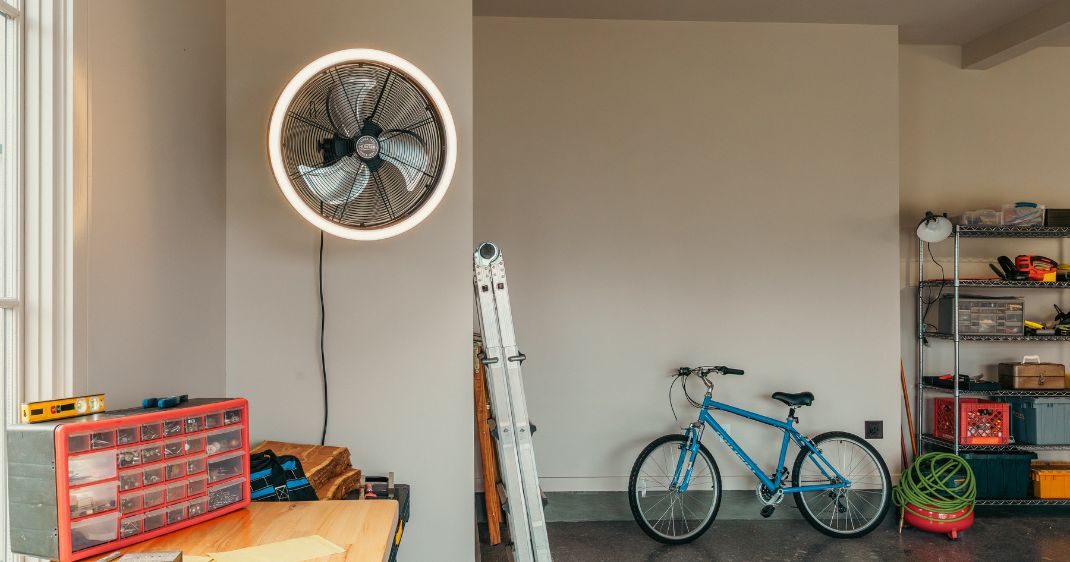
This is why the center of the garage may not always be the most useful location for a fan. A traditional ceiling fan provides broad overhead airflow throughout the room. For a particular work area, a targeted garage fan can direct the breeze closer to where you need it.
The Hunter DualMount Garage Fan offers this type of flexibility. It can be mounted on a wall or ceiling and tilted toward the area where you want to feel the breeze. SureSpeed® technology delivers high-velocity airflow. The six-speed reversible WhisperWind® motor supports the whisper-quiet performance Hunter owners expect.
Hunter workshop fans offer more options for garages that need focused airflow.
Is a Ceiling Fan Better Than a Portable Fan for a Garage?
The way you use your garage can help answer this question.
A ceiling fan provides overhead airflow without taking up valuable floor space. Once installed, it is always available when you walk into the garage.
A portable fan from Hunter provides you even more freedom to move the airflow around. You can point it toward your workbench in the morning, then move it somewhere else when your plans change. Hunter portable fans can go wherever you need a breeze.
A mounted garage fan offers another approach for people who want to keep the floor clear while aiming airflow toward a particular spot.
Think about your normal routine in the garage. The best fan should complement the way you already use the space.
Can a Ceiling Fan Help Dry a Wet Garage Floor?
After a rainy drive home, water may drip from your vehicle and collect on the garage floor. In colder climates, melting snow can create a similar situation.
Moving air can support the drying process by encouraging evaporation from wet surfaces.
This is one reason garage owners sometimes run ceiling fans after bringing home a wet vehicle or storing damp recreational equipment. Boat owners may also use airflow after a rainy day on the water.
As water dries, that moisture moves into the surrounding air. If the garage starts feeling humid, fresh air or a dehumidifier may help.
A ceiling fan can support the drying process while keeping valuable floor space open.
So, Will a Ceiling Fan Cool a Garage?
Yes, a ceiling fan can make a warm garage feel more comfortable when its airflow reaches the people using the space.
The right setup depends on how you use your garage. Hunter garage ceiling fans give homeowners options designed for dependable airflow in garages and workshops.
For 140 years, Hunter has focused on the engineering behind better air movement. That experience continues through SureSpeed® technology and WhisperWind® motors, supporting the quiet and wobble-free performance Hunter owners expect.
If you are tired of walking into a hot garage and immediately wanting to leave, the right airflow can help make that space somewhere you actually enjoy spending time.
Frequently Asked Questions About Cooling a Garage With a Ceiling Fan
Will a ceiling fan cool a garage?
Yes, but a ceiling fan cools people, not the garage itself. It creates airflow that can make you feel cooler and more comfortable without lowering the room’s air temperature.
Can a ceiling fan help a garage cool down faster at night?
Opening the garage door when outdoor temperatures fall can allow cooler air to enter. A ceiling fan can help circulate that incoming air throughout the garage.
Should I leave my garage ceiling fan running all day?
For personal comfort, a ceiling fan provides its greatest benefit while someone is present to feel the airflow. Running it for drying or air mixing may also be useful under certain garage conditions.
Can a ceiling fan help dry moisture in a garage?
Yes. Moving air can help wet areas dry faster, especially when fresh air can also enter the garage.
What type of fan works best in a large garage?
A big garage may need a larger fan to move enough air through the space. For especially large garages, more than one fan may provide better coverage.