Can Outdoor Ceiling Fans Get Wet or Be Rained On?
pImagine relaxing outside on your back porch and watching the clouds roll in. As the sky starts to darken, raindrops begin to fall. Soon the wind is blowing giant raindrops across the patio, drenching the ceiling fan in your pergola above.
You can’t help but wonder, can an outdoor fan be rained on?
It depends on your fan’s rating.
Wet-rated outdoor ceiling fans are built to handle direct rain and moisture. Damp-rated fans are meant for covered outdoor spaces where they stay protected from direct rain. Hunter Fan is proud to offer both options to fit your needs.
This fan’s rating can help you decide where to properly install your fan.
For 140 years, Hunter has designed ceiling fans for real-life use. Our engineering team still tests outdoor models to make sure they can handle the conditions they’ll face. Wet-rated Hunter fans undergo rain tests that simulate direct water exposure.
The Fan’s Outdoor Rating Determines How Much Rain It Can Handle
It’s true that a wet-rated outdoor ceiling fan can get rained on directly if it’s installed in the proper location.
Installing the right fan for your space matters. A fan exposed to conditions beyond its rating could experience operational problems or visible damage over time.
Our outdoor ceiling fans go through extensive testing to make sure each model can withstand the environmental conditions associated with its intended location.
Damp-Rated and Wet-Rated Fans Are Built for Different Outdoor Conditions The key difference is how much moisture each fan can handle.
Damp-rated ceiling fans are made for covered outdoor spaces where humidity may be present while the fan stays protected from direct precipitation. For example, a covered patio lets air move while keeping rain away from the fan.
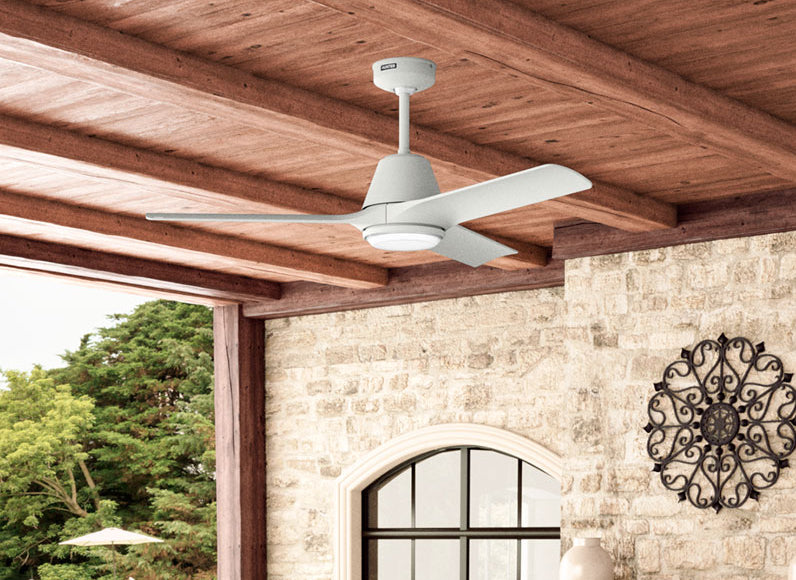
Wet-rated ceiling fans can handle direct rain and moisture. You can install them in open outdoor spots like pergolas or uncovered patios.
What happens around your fan is more important than just having a roof. A fan near the edge of a covered patio might still get wet during a windy storm. If water often reaches the fan, you’ll want a wet-rated model.
Hunter’s WeatherMax® technology makes outdoor fans even tougher. WeatherMax® ceiling fans are wet rated and built for demanding outdoor conditions. Premium materials resist corrosion caused by water and salt air, while durable blades are engineered to resist drooping.
Each rating has its own purpose. The best choice depends on where you’ll hang the fan and what weather it will face.
Wet-Rated Ceiling Fans Are Engineered and Tested for Direct Rain Exposure
Hunter backs its wet-rated fans with thorough testing that simulates tough outdoor conditions.
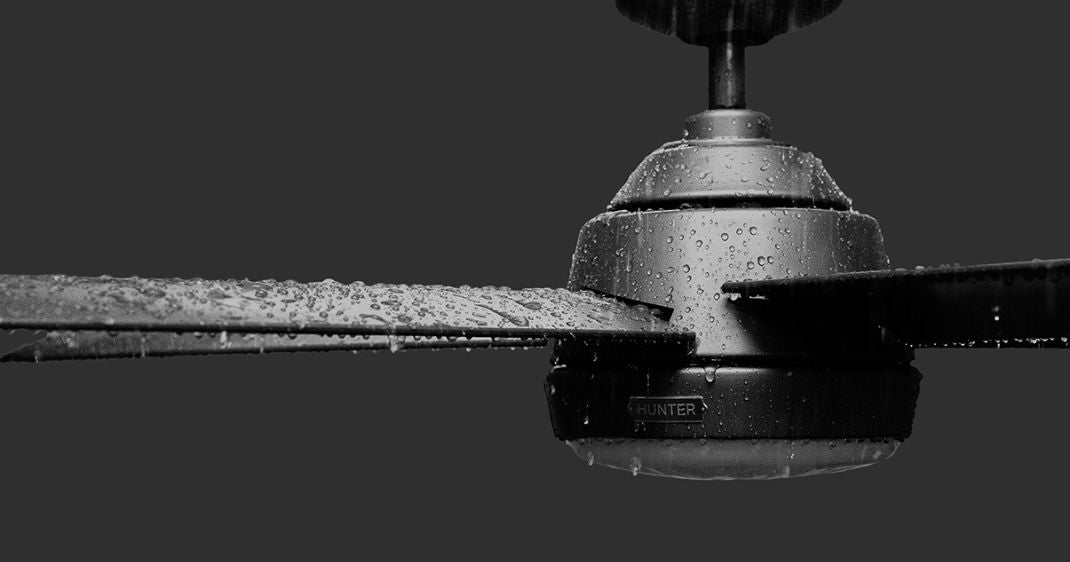
To earn a wet rating, Hunter fans go through several tests to check the safety of their parts. One test uses high-powered hoses to simulate heavy rain.
During testing, the fan gets hit with almost six bathtubs’ worth of water.
That’s quite a bit of rain.
These tests show that Hunter wet-rated fans can handle direct rain in outdoor spaces. Moisture-resistant parts help them work well in changing conditions, while strong blades are built for outdoor use.
If you need airflow in a spot without a solid roof, Hunter’s wet-rated WeatherMax® ceiling fans are made for tough outdoor environments.
Open Pergolas and Exposed Patios Require the Right Weather Rating
Think about where your fan will be during the worst storm of the year.
Your patio might stay dry during a light rain, but a summer thunderstorm could blow rain under the roof and soak the outer part of the patio.
Where you place the fan in that space is important.
If your porch is deeply covered and rain never reaches the fan, a damp-rated model should work. If the fan is near the edge and could get wet from wind-driven rain, a wet-rated model is a better choice.
With an open pergola, the choice is easy since rain can reach the fan directly. The same goes for uncovered patios or other open areas.
Choosing a fan that fits your actual environment helps it last longer.
Hunter offers patio ceiling fans for all kinds of outdoor spaces. You can also use Hunter’s Ceiling Fan Selector to narrow down models based on the size and features you need.
Think about how you use your outdoor space, too. A patio dining area might benefit from an outdoor ceiling fan with a light for evenings. Bigger outdoor areas may need a wider blade span to move air where people actually gather.
The best outdoor ceiling fan should match the real conditions around your home. Think beyond a calm, sunny day and consider what weather can actually reach the fan during a storm.
WeatherMax® Adds Protection Against Demanding Outdoor Conditions
Outdoor ceiling fans often deal with much more than just the occasional rainstorm.
Salt air can really do a number on your outdoor fixtures if you find yourself near the coastline. Over time, it can cause corrosion that affects how the fan looks and works. Moisture can also make blades lose their shape if they’re made with unsuitable materials.
Hunter WeatherMax® ceiling fans are made for demanding outdoor conditions. Premium materials resist corrosion caused by water and salt air, while durable blades are engineered to resist drooping.
Hunter engineers test WeatherMax® fans for water exposure and corrosion resistance. They also check how well these fans handle sunlight to support lasting outdoor performance.
The 60-inch Skysail Outdoor ENERGY STAR® Fan with LED Light is one example of a Hunter fan with WeatherMax® technology. Its wet rating means you can use it in open outdoor areas, while corrosion-resistant materials help protect it from water and salt air. SureSpeed® technology gives you a strong breeze during warm weather.
All WeatherMax® fans feature the SureSpeed® Guarantee for optimized high-speed performance.
SureSpeed® is Hunter’s airflow technology. Applicable Hunter fans use WhisperWind® AC or DC motors for whisper-quiet operation.
If you have a beach house or another outdoor space with tough conditions, WeatherMax® gives extra protection while maintaining the quality and style you expect from Hunter.
The Right Wet-Rated Fan Can Handle the Rain
A wet-rated outdoor ceiling fan can handle direct rain when installed in the right location. For demanding environments, Hunter WeatherMax® fans use premium materials designed to resist corrosion caused by water and salt air, while durable blades are engineered to resist drooping.
For 140 years, Hunter has focused on making fans that move air dependably. Our Memphis, Tennessee, facility continues rigorous testing that supports the quiet, wobble-free performance Hunter customers expect.
Rain might change your afternoon plans.
But with the right outdoor ceiling fan, you won’t have to worry about the fan above you.
Frequently Asked Questions About Outdoor Ceiling Fans and Rain
Can an outdoor fan be rained on?
Yes. A wet-rated outdoor ceiling fan is designed for direct exposure to rain. Damp-rated outdoor fans belong in covered areas protected against direct precipitation.
What happens if a damp-rated ceiling fan accidentally gets rained on?
A damp-rated fan should stay protected from direct rain. If yours accidentally gets wet, turn it off and let it dry completely before using it again. If you notice rust, unusual noises, or problems with how the fan runs, have it checked before turning it back on.
Can a wet-rated ceiling fan be installed under an open pergola?
Yes. An open pergola leaves the fan exposed to rain, so you will need a wet-rated model. Hunter wet-rated fans are built to handle direct rainfall when installed according to the manufacturer’s instructions.
Can I leave my Hunter outdoor ceiling fan up during winter?
Yes. Hunter outdoor ceiling fans do not require seasonal winterization when installed according to their location rating. Damp-rated fans should remain protected against direct precipitation.
Wet-rated fans can handle direct exposure to rain and snow. Avoid applying chemicals or protective coatings in an attempt to weatherproof the fan because doing so could affect the finish or potentially void warranty coverage.
Will an outdoor ceiling fan rust after getting wet?
Outdoor fans are designed with materials suited to outdoor conditions, but protection varies by model. Hunter WeatherMax® fans use premium materials designed to resist corrosion caused by water and salt air.
Can an indoor ceiling fan be used on a covered patio?
No. Covered patios can still expose a fan to outdoor humidity and moisture, so the fan should carry the appropriate outdoor rating for the conditions.